The Cottage Never Closes: How Michigan's Lake Cabins Became Family Heirlooms

Photo by Photo by Deepak Adhikari on Unsplash on Unsplash
Somewhere in northern Michigan, there is a screen door that has been slamming shut every summer since 1967. The spring is original. The wood frame has been repainted four times. Three generations of kids have learned to let it go slowly—and failed. That door, in a way, is the whole story.
Michigan has more than 11,000 inland lakes. It has two full coasts of Great Lakes shoreline. It has a cultural relationship with the cottage that goes so deep it barely registers as a relationship anymore—it's just a given, like rooting for the Lions even when it hurts, or knowing that 'up north' is a direction and a feeling at the same time.
But spend some time with families who have owned their cottages for decades, and you start to understand that what looks like a vacation property from the outside is something else entirely from within. These places are archives. They are rituals made of wood and water. And as the economics of lakefront real estate get increasingly brutal, a lot of Michigan families are quietly reckoning with what it means to hold on—or let go.
What 'Up North' Actually Means
For the uninitiated, 'up north' in Michigan isn't a specific place. It's a gravitational pull. It's the moment you cross some invisible line—maybe past Clare, maybe past Grayling, maybe when the billboards thin out and the tree line thickens—and your shoulders drop about two inches.
The cottage is the anchor of that feeling. And for a huge number of Michigan families, it's been the anchor for generations.
The Pietrzak family has owned a small cottage on a lake near Cadillac since 1971. Stan Pietrzak, now 79, bought it with money saved from twelve-hour shifts at a Flint auto parts plant. His daughter, Renee, spent every summer of her childhood there. Her kids did too. Now her grandchildren are learning to swim off the same dock Stan built with leftover lumber from a neighbor's barn project.
'My dad is gone now,' Renee says, sitting on the porch in late September when most of the lake has gone quiet. 'But I hear him here. I hear him in the way the water sounds at night. I don't know how to explain it better than that.'
She doesn't need to. Anyone who has a cottage in their family history already knows exactly what she means.
The Economics Nobody Talks About
Here's the part that gets complicated: Michigan lakefront property has exploded in value. What Stan Pietrzak bought for a few thousand dollars in 1971 is now worth—in comparable markets—somewhere between $200,000 and $500,000 depending on the lake, the size, and the access. That's a remarkable asset. It's also a remarkable burden.
Property taxes have climbed. Maintenance costs are relentless—docks, roofs, septic systems, boats that seem to exist primarily to need repairs. And when the original owners pass away and the property transfers to adult children who may be spread across different states, with different financial situations and different levels of attachment, the calculus gets genuinely hard.
Attorney and estate planner Dana Kowalczyk, who practices in Traverse City and has handled dozens of cottage succession cases, puts it plainly: 'The cottage is often the most emotionally loaded asset in an estate. It's not like dividing up a bank account. You're dividing up Christmas mornings and the summer your parents were still healthy and every memory anyone in the family has ever made in one place.'
Some families set up LLCs or formal family trusts to manage shared ownership. Others create detailed usage calendars, maintenance contribution schedules, and buy-out provisions for siblings who want out. It's a lot of legal scaffolding to protect something that is, at its core, about feeling like a kid again.
And some families, inevitably, sell. Those sales are rarely clean emotionally, even when they make obvious financial sense.
Year-Round, Not Just July
One of the bigger misconceptions about Michigan cottage culture is that it's a summer thing. Increasingly, it isn't.
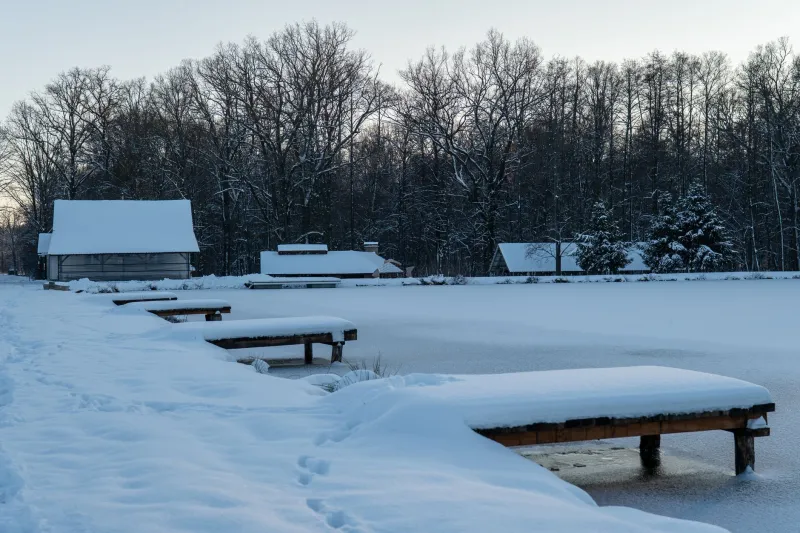
The pandemic reshuffled a lot of assumptions about where people needed to be, and many Michigan cottage owners discovered—or rediscovered—what their properties looked like in November. In January. In that strange, still week between Christmas and New Year's when the lake freezes and the world goes quiet in a way that feels almost sacred.
Mark and Christine Aldrich, who own a cottage near Elk Rapids, started spending full weekends there in winter about five years ago. 'We almost sold it,' Christine admits. 'The summer costs felt hard to justify. Then we drove up one February weekend on a whim, built a fire, and sat there watching the ice move. We haven't talked about selling since.'
Winter cottage culture has its own rhythms—snowshoeing on frozen lakes, ice fishing, wood smoke and board games and the specific pleasure of being completely unreachable. For families who make the leap, it often deepens the relationship with the property rather than extending it. The cottage stops being a seasonal escape and becomes something closer to a second home in the fullest sense.
What These Places Actually Hold
Ask cottage owners what they'd save if they had to sell, and the answers are revealing. Not the furniture—that can be replaced. Not the boat, usually. What people want to take with them are the things that can't be transferred to a new address: the pencil marks on the door frame measuring kids' heights, the handwritten recipe card for the potato salad that only tastes right eaten outside, the specific view from the dock at 6 a.m. when the mist is still on the water.
Those things aren't transferable. Which is exactly why keeping the cottage matters so much to so many people.
Michigan's cottage tradition is, at its core, a story about continuity. About the belief that some places should stay in the family—not because of their market value, but because of what they hold. Memory. Identity. The understanding that you come from somewhere specific, and that somewhere is worth returning to.
The screen door is still slamming. The dock needs new boards next spring. The property tax bill arrived last week and nobody is happy about it.
But the family is going up next weekend. They always do.