Chosen on Purpose: The Creatives Betting Big on Michigan's Overlooked Towns
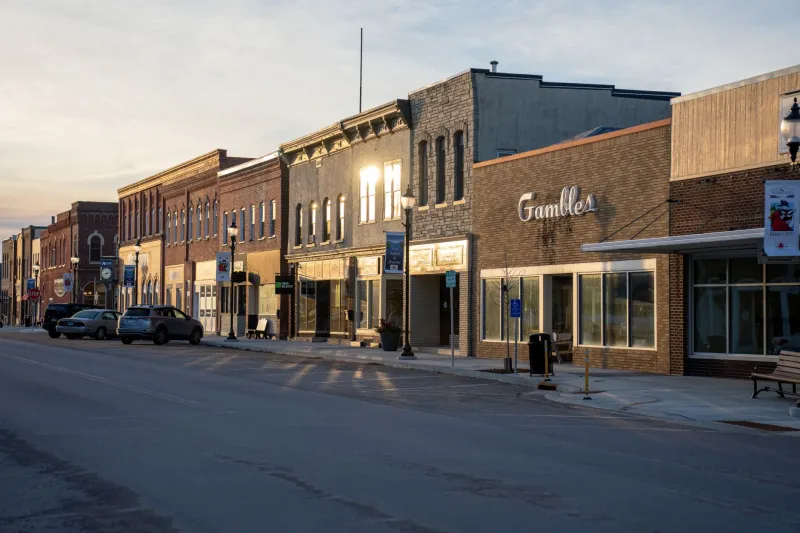
There's a certain kind of person who looks at a boarded-up storefront on a quiet main street and sees something other than abandonment. They see square footage. They see possibility. They see a place where rent is manageable, neighbors are curious, and the community is hungry for something new.
Across Michigan — from the Upper Peninsula's forgotten mill towns to the Thumb's sleepy agricultural corridors — that kind of person has been showing up in growing numbers. They're opening galleries in old hardware stores, pouring craft beer in repurposed machine shops, and stocking shelves with used books in spaces that once sold feed and seed. And in doing so, they're quietly rewriting the story of what a Michigan town can be.
Why Skip the City?
It's worth asking the obvious question first: why would a young artist or entrepreneur choose Bessemer over Detroit, or Alpena over Grand Rapids? The answer, depending on who you ask, is almost always the same — the math and the meaning both add up differently in a small town.
"In a bigger city, I would've spent the first five years just trying to survive," says one ceramicist who relocated from Chicago to a small town in the Keweenaw Peninsula. "Here, I could actually build something. The overhead is low, but more than that, people actually notice you. You matter to the place in a way that's hard to explain until you experience it."
For others, the draw is personal. A graphic designer who grew up in Traverse City and eventually landed in Ironwood put it simply: "I wanted to be somewhere that needed me. There's something really motivating about that."
The trend mirrors a broader national pattern of "creative migration" — a documented movement of artists and makers toward smaller, cheaper, and often post-industrial communities — but in Michigan, it carries a particular emotional weight. These aren't just business decisions. They're declarations of faith in places that have spent years being told their best days are behind them.
What They're Building
The physical spaces these creatives are opening say a lot about their intentions. They're not importing a cookie-cutter concept from a bigger market. They're building things that fit the specific texture of the town they've chosen.
In Manistique, a small city on the northern shore of Lake Michigan, a couple transformed a long-vacant downtown building into a combination art gallery and community gathering space. They show local painters and photographers, host open-mic nights, and run workshops for kids during the summer. The space functions less like a traditional gallery and more like a neighborhood living room — which, in a town that lost its last real community hub years ago, is exactly what it needed to be.
In Oscoda, on the shores of Lake Huron, a former schoolteacher opened a used bookstore that doubles as a lending library for residents who can't afford to buy. She also hosts a monthly book club that's become one of the most attended events in town, drawing people who haven't had a reason to leave their houses on a weeknight in years.
And in towns like Munising, Newberry, and Ontonagon, craft breweries have become anchors for a new kind of local identity — places where visitors from downstate stop in and discover a community that's more interesting, more alive, and more welcoming than they expected.
The Ripple Effects Are Real
The impact of these individual choices adds up faster than you might think. When one creative business opens in a struggling downtown, it changes the foot traffic equation for every other business on the block. A coffee shop that opens next to a gallery attracts the gallery's visitors. A brewery that hosts live music pulls people in on nights when they'd otherwise stay home. A bookstore that becomes a community hub gives people a reason to walk past the other storefronts they've been ignoring.
Local officials and economic development groups have started paying attention. Several Michigan communities have begun offering incentives specifically designed to attract creative businesses — reduced commercial rents, small business grants, and streamlined permitting for cultural spaces. It's an acknowledgment that the old playbooks for small-town economic revival, heavy on industrial recruitment and big-box retail, haven't been working. Something different is worth trying.
"What we've seen is that one authentic, community-rooted business can do more for a town's sense of itself than a dozen chain stores," says one regional economic development coordinator in the Upper Peninsula. "People start believing in the place again. And when that happens, other things follow."
The Challenges Are Just as Real
None of this is easy, and it would be dishonest to pretend otherwise. Small-town Michigan still comes with small-town Michigan problems. Reliable broadband is still a struggle in many communities. Healthcare access is limited. The workforce pool is thin, and finding skilled employees for a growing business can be genuinely difficult.
There's also the social dimension to navigate. Moving into a community as an outsider — especially one with new ideas and a different cultural background — requires humility and patience. The creatives who've made it work in these towns almost universally emphasize the importance of listening before leading, of becoming part of the community rather than trying to transform it on their own terms.
"You have to earn your place," says the bookstore owner in Oscoda. "You're not saving anyone. You're joining something that already exists and trying to add to it. That's a very different mindset, and it matters."
Michigan's Next Chapter Is Being Written in Unexpected Places
There's something deeply Michigan about this whole phenomenon, when you think about it. This is a state that has always had to figure out how to reinvent itself — from the fur trade to the auto industry, from manufacturing to tourism, from boom to bust and back again. The creative migration happening in small towns right now is just the latest version of that ongoing story.
The people choosing to put down roots in Bessemer or Baldwin or Bad Axe aren't doing it because it's the easy path. They're doing it because they see something worth believing in. And in a state that has never stopped believing in itself, even when it had every reason to, that instinct feels entirely at home.
Next time you're road-tripping through a part of Michigan you've always driven past, pull off the highway. Walk the main street. Find the brewery, the gallery, the little bookstore with the hand-lettered sign. Chances are, someone in there has a story worth hearing — and a town worth knowing.