From Factory Floors to Dance Floors: Michigan's Quiet Reign Over Electronic Music
There's something almost poetic about the fact that the same state responsible for putting America on four wheels also gave the world a brand-new way to move on two feet. Michigan's relationship with electronic music isn't a footnote in music history — it's a founding chapter, and producers, DJs, and music nerds around the globe know it, even if plenty of folks back home are still catching up.
So let's give Michigan its flowers. Loud ones. With a 909 kick drum underneath.
The Sound That Started in Smoke and Steel
You can't talk about Michigan's electronic music legacy without starting in Detroit — specifically, without talking about what the city felt like in the early 1980s. The auto industry was contracting. Neighborhoods were hollowing out. But in that particular kind of tension, something creative always seems to ignite.
Juan Atkins, Derrick May, and Kevin Saunderson — collectively known as the Belleville Three — grew up in the suburbs outside Detroit and took the synth-heavy soul of Motown, filtered it through European influences like Kraftwerk and Giorgio Moroder, and created something entirely their own. They called it techno. The rest of the world eventually caught on.
What made Detroit techno distinct wasn't just the tempo or the machinery of it. It was the emotional undertow. There was longing in those tracks. An industrial moodiness that reflected the city outside the studio window. Juan Atkins has described the music as being about the future — not a utopian one, but a real, complicated, uncertain one. That tension between possibility and loss? That's Michigan in a nutshell.
The Venues That Kept the Fire Burning
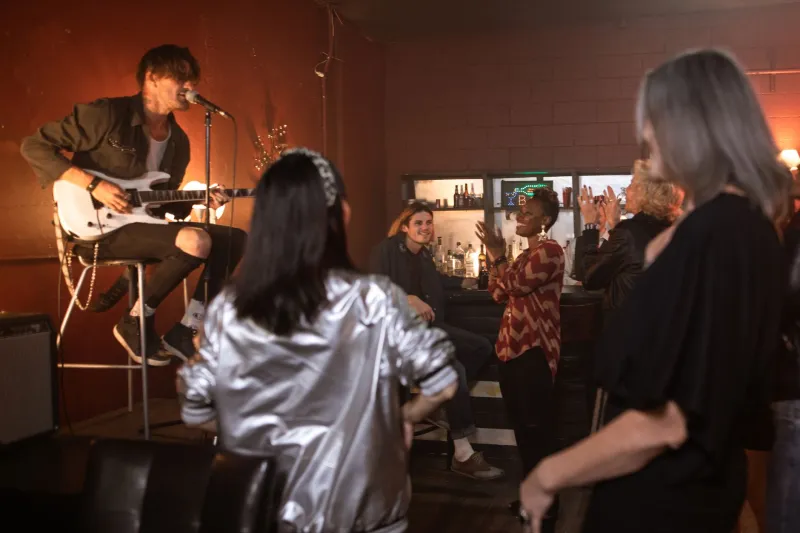
No music scene survives on studio recordings alone. Detroit's underground club culture was the incubator that let techno breathe and evolve. Spots like the Music Institute — open only from 1988 to 1989 but legendary to this day — gave early DJs a room to experiment in front of real crowds. The energy in those spaces shaped how producers thought about sound. When you're watching people respond to a track in real time, you learn things no music school can teach you.
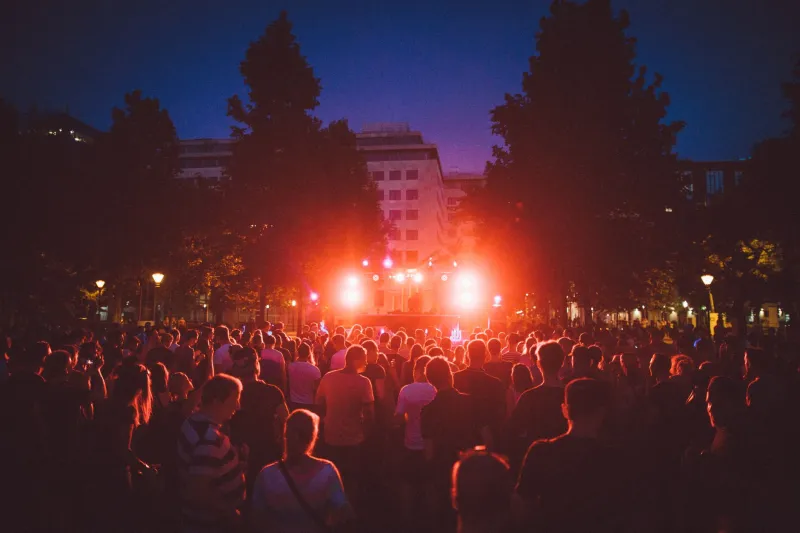
Movement, the annual electronic music festival held every Memorial Day weekend in Detroit's Hart Plaza, has become one of the most important gatherings of its kind in the world. Started in 2000 as the Detroit Electronic Music Festival, it draws artists and fans from across the globe — and yet it still feels unmistakably Midwestern. There's a groundedness to it. People actually talk to each other between sets. You might find yourself chatting with a legendary producer at a food truck and not even realize it until later.
Beyond Detroit, cities like Grand Rapids and Ann Arbor have developed their own electronic music ecosystems. Smaller venues, DIY warehouse events, and college-circuit shows have created a pipeline of new talent that keeps the state's sonic identity refreshing itself.
What Michigan Producers Sound Like Today
The current generation of Michigan-based electronic artists is doing something interesting — they're not abandoning the Detroit legacy, but they're not trapped by it either. Producers working out of Detroit, Flint, and Lansing are blending techno foundations with ambient textures, hip-hop rhythms, and even folk-influenced melodic structures that feel distinctly tied to the state's landscape.
Think about what Michigan actually looks like: vast stretches of open highway, frozen Great Lakes in February, the weird quiet of the Upper Peninsula at dusk. That geography seeps into the music. There's space in Michigan-made electronic tracks — room for a bassline to breathe, for a synth pad to stretch out like a horizon. It doesn't sound like New York or Los Angeles. It sounds like somewhere that has weather.
Local producers who've come up through Detroit's community spaces and music incubators talk about a kind of shared responsibility to the tradition. You learn the history before you start rewriting it. That reverence, combined with genuine innovation, keeps Michigan relevant in conversations happening in Berlin, Tokyo, and São Paulo.
Motown's Invisible Hand
It would be a mistake to overlook Motown's role in all of this. The label that Berry Gordy built on West Grand Boulevard didn't produce electronic music — but it produced something arguably more important: a proof of concept that Michigan could change popular music on a global scale. The infrastructure, the ambition, the community of session musicians and producers who refined their craft in Detroit's studios — that culture of musical excellence didn't disappear when Motown moved to Los Angeles in 1972. It went underground. It evolved. And a decade later, it re-emerged as techno.
There's a direct lineage there, even if the sounds are wildly different. The discipline, the innovation, the willingness to create something new rather than imitate what was already working — that's Motown DNA showing up in a very different form.
Why It Matters Right Now
In an era when music production has been democratized by software and streaming, the story of Michigan's electronic music legacy is more relevant than ever. You don't need a major label or a professional studio to make something that reaches millions of people. Detroit knew that before the internet did. The city was running independent labels, self-distributing records, and building international reputations on pure artistic credibility decades before the DIY model became the default.
For anyone in Michigan who's making music in their bedroom, or performing at a local venue, or just starting to experiment with production software — know that you're standing on some seriously solid ground. The state didn't just participate in the history of electronic music. It wrote a good chunk of it.
And honestly? The next chapter is probably already being recorded somewhere in Detroit right now, in a room you've never heard of, by someone you'll be talking about in twenty years.