Press Play on Michigan: The Songs Scoring Our State's Loudest Chapter Yet
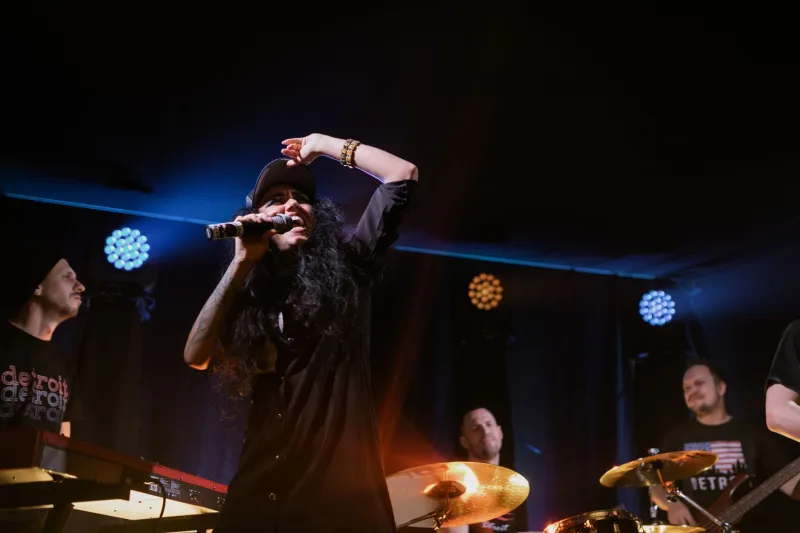
There's a moment every Michigander knows. You're driving down a two-lane highway somewhere between a cornfield and a closed factory, the lake is somewhere behind you, and a song comes on that makes the whole landscape feel like it was written just for you. Not for Nashville. Not for Brooklyn. For here.
That feeling is happening a lot more lately — and it's not a coincidence.
Michigan's music scene has always punched above its weight. Motown, techno, garage rock, Eminem — the state has handed the world more sonic blueprints than most people bother to acknowledge. But what's unfolding right now feels different. It's quieter in some ways, louder in others. It's local artists writing songs that don't apologize for being from here, and listeners responding like they've been waiting for exactly this.
The Sound of a State Figuring Itself Out
Ask anyone who's been paying attention to Michigan's independent music circuit over the last few years, and they'll tell you the same thing: the music got more honest. The glossy ambition of trying to sound like somewhere else started giving way to something rawer and more rooted.
Flint-based singer-songwriter Amara Leigh — who's been playing the regional festival circuit since 2021 — puts it plainly. "For a long time, you felt like you had to sand down where you were from to get taken seriously. Now it feels like the opposite. People want to know you're from Flint. They want that in the music."
That shift shows up in the streaming numbers, too. Regional music discovery playlists curated around Michigan tags and local scene keywords have seen consistent growth on platforms like Spotify and Apple Music since 2022, with listeners increasingly seeking out artists who sound like they come from a specific somewhere rather than a generically polished nowhere. Authenticity, it turns out, has an algorithm.
Songs That Hit Different When You're From Here
There's a specific category of song that Michiganders have always claimed — tracks that weren't necessarily written about Michigan but feel like they were. The Stooges' raw, bored-suburban-Detroit fury. Bob Seger's highway nostalgia. Kid Rock's complicated, love-it-or-leave-it bravado. These songs became regional totems because they captured something true about the emotional texture of living here.
The new wave is doing the same thing, but with more self-awareness.
Grand Rapids-based indie folk duo The Copperline made waves last year with a track called "Stay Season," a quietly devastating song about watching a best friend leave the state for a job that didn't exist locally anymore. It wasn't a protest song or a pity party — it was just painfully specific and painfully real. It racked up tens of thousands of streams almost entirely through word-of-mouth sharing among Michigan listeners who kept tagging each other with the same message: this is us.
That's the new Michigan anthem formula, if there is one. Specific enough to feel true. Open enough to sting universally.
Detroit Is Still the Engine
You can't talk about Michigan music without talking about Detroit, and Detroit is doing what Detroit does — taking something broken and making it loud and beautiful.
The city's hip-hop scene has been building a national profile that goes beyond nostalgia for Eminem's shadow. Artists like Boldy James and Icewear Vezzo have been putting Detroit rap back on the map with a style that's distinctly regional — unhurried, cinematic, unapologetically street-level. But alongside the established names, a younger wave of producers and vocalists is emerging from spaces like the Conant Gardens neighborhood and the east side warehouse DIY circuit, making music that sounds like Detroit in 2024: complicated, resilient, and deeply unwilling to be written off.
Meanwhile, the city's electronic music legacy — born in the 1980s and never really left — is experiencing a revival among younger audiences who are discovering techno not as a retro curiosity but as a living, breathing local tradition. Underground parties in repurposed industrial spaces are drawing crowds who treat the music as something closer to a civic ritual than a night out.
Up North Has Something to Say
One of the more surprising developments in the Michigan music conversation is how much creative energy is flowing out of the state's northern reaches.
Traverse City, Marquette, and even smaller towns like Elk Rapids and Boyne City have developed enough of a local arts infrastructure — festivals, small venues, artist residencies tied to the tourism economy — that musicians are actually choosing to stay and build careers there rather than treating the north as a place you leave when you get serious.
Marquette-based songwriter Cal Brandt, who plays under the name Ironwood Road, has been releasing sparse, atmospheric folk records that feel specifically Upper Peninsula in their emotional register — vast, a little lonely, stubbornly proud. "There's a whole emotional language up here that doesn't exist anywhere else," he says. "The winters, the isolation, the way the lake changes everything. I couldn't write these songs anywhere else."
His small but fiercely devoted following skews heavily Michigan, and listeners from the U.P. in particular treat his music with a possessiveness that's almost tribal. He gets it, they say. He actually gets it.
Why This Moment Feels Different
Michigan has been through enough cycles of boom and bust, hope and disappointment, that its residents tend to be skeptical of anyone declaring a renaissance. We've heard that word before. We know how it ends.
But the music feels like something more durable than a trend. It's not built on outside investment or industry attention — it's built on artists deciding to stay, to dig in, to make work that means something to the people around them. That's a slower kind of momentum, but it's the kind that lasts.
And there's something happening at the listener level, too. People are actively seeking out Michigan music the way they seek out Michigan-made food or Michigan-brewed beer — as an act of local loyalty that also happens to be genuinely satisfying. The regional identity piece isn't incidental. It is the point.
Build Your Own Michigan Playlist
If you want to start somewhere, here's a loose roadmap:
- Start with the Detroit underground. Dig into the city's current hip-hop and electronic scenes. There's more happening than the national press has caught up to.
- Find the folk coming out of the north. Artists working in the Traverse City and Marquette orbits are making some of the most emotionally honest music in the state right now.
- Check the festival lineups. Events like Blissfest, Electric Forest, and smaller regional gatherings are consistently surfacing local talent worth following year-round.
- Follow the local music writers. Michigan-based music journalism — at alt-weeklies, local blogs, and community radio stations — is doing the hard work of documenting the scene in real time.
The playlist is already there. You just have to press play.
And when that song comes on — the one that makes the highway and the lake and the closed factory all make sense at once — you'll know exactly why you're from here.