Blinker Optional: A Survival Guide to the Michigan Driving Experience
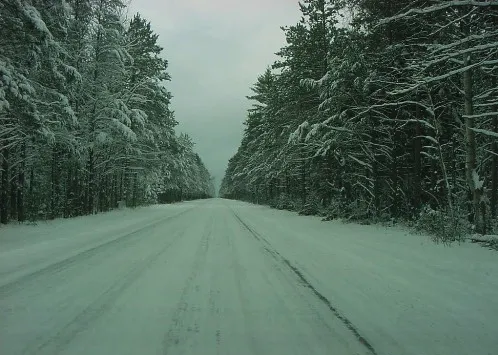
Photo: Photographer: Jim Toomey, CC BY-SA 2.5, via Wikimedia Commons
The first thing out-of-staters learn when they move to Michigan is that driving here requires a whole separate education. You passed your road test. You know the rules. And yet, within about four minutes on a Michigan highway, you will encounter something that makes you question everything you thought you knew about operating a motor vehicle.
Welcome. The locals are (mostly) friendly. The roads are (sometimes) fine. And the Michigan left turn will (definitely) break your brain.
Let's Start With the Left
If you've never encountered a Michigan left, picture this: you want to turn left. Normal enough. But instead of turning left, you turn right, merge onto a divided road, make a U-turn at a designated median crossover, and then proceed in the direction you originally wanted to go.
Yes, really. This is legal. This is normal. This is, according to traffic engineers, actually more efficient than a traditional left turn at a busy intersection.
Michiganders have been executing this maneuver their entire driving lives and barely think about it anymore. Visitors, on the other hand, can often be identified by the moment they blow past their intended turn, pull into a parking lot, and sit there gripping the steering wheel trying to figure out what just happened.
The Michigan left isn't a quirk. It's a rite of passage. And once it clicks, you'll find yourself defending it to confused friends from Ohio with an almost evangelical fervor.
The Highway Hierarchy
On Michigan freeways, there is an understood social contract. The left lane is for passing — not for cruising, not for phone calls, not for the scenic experience. If you're in the left lane and not actively overtaking someone, you will feel the collective psychic pressure of every driver behind you willing you to move.
This isn't road rage. It's road etiquette. There's a difference.
The right lane has its own culture too. This is where you merge, where you prepare your exit, where you accept your place in the natural order. The middle lane, on a three-lane stretch, belongs to whoever has the most confidence and the least attachment to a fixed plan.
And on I-75 heading north on a Friday in July? All rules dissolve. It's just survival.
Winter Driving Is a Personality Trait
You haven't truly experienced Michigan driving until you've done it in January. The roads get icy, the visibility drops to approximately zero, and a certain kind of Michigan driver emerges — calm, deliberate, and faintly contemptuous of anyone who looks nervous.
There's a specific look that Michigan drivers give when they see someone in a big SUV spinning out on black ice. It's not cruel. It's just the look of someone who has been doing this for 30 winters and knows that four-wheel drive does not mean four-wheel stop.
Winter driving here is a whole separate skill set. You learn to brake early. You learn to feel the difference between packed snow and ice beneath your tires. You learn that the worst drivers in a snowstorm are always the ones who are either way too confident or way too scared.
The sweet spot — calm, steady, respectful of physics — is the Michigan way.
The Wave, the Nod, and the Honk
Michigan has its own system of road communication that goes well beyond turn signals (which, to be fair, are treated as optional by a meaningful percentage of the driving population).
There's the two-finger wave — a subtle lift of the index and middle fingers off the steering wheel, deployed when someone lets you merge, waves you through a four-way stop, or just makes eye contact at the right moment. It's the Michigan equivalent of a handshake.
There's the slow honk — not the aggressive, sustained lean on the horn you'd hear in Chicago, but a polite, single tap that means "hey, the light changed" or "I see you" rather than anything confrontational.
And then there's the long pause at a four-way stop, where two Michigan drivers face each other and engage in a silent negotiation that can last upward of ten seconds as each one gestures for the other to go first. It's maddening. It's also kind of charming.
Construction Season: Michigan's Sixth Season
Officially, Michigan has four seasons. Unofficially, it has five: spring, summer, fall, winter, and construction. The orange barrel is basically the state bird at this point.
Every Michigan driver has a mental map of which roads are currently torn up, which detours add 20 minutes to the commute, and which construction projects have been "almost finished" for three consecutive years. Navigating this landscape is less about following GPS directions and more about local knowledge, stubbornness, and a willingness to take the back road through a town you've never heard of.
Somehow, it works. Michigan drivers have adapted to perpetual construction the way salmon adapt to upstream swimming — with effort, with resignation, and with the understanding that this is just what the journey looks like.
What the Road Teaches You
Here's the thing about Michigan driving: underneath all the quirks and contradictions, there's a genuine culture of resilience on these roads. People let each other in. They wave. They slow down for deer and school buses and funeral processions. They understand that the highway is shared space, and that getting somewhere safely matters more than getting there first.
Most of the time, anyway. The left lane thing is still non-negotiable.