Grandma's Recipe, Chef's Vision: Inside Michigan's Most Exciting Food Movement
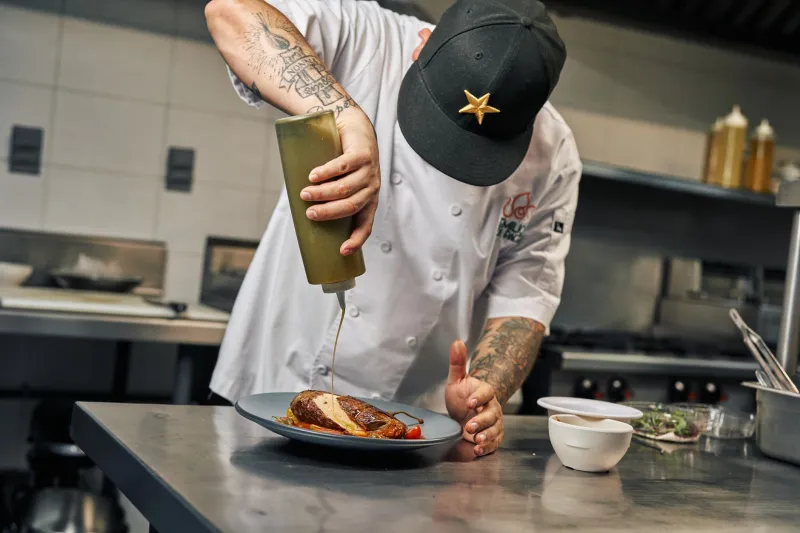
There's a dish at a small restaurant in Detroit's Corktown neighborhood that looks, at first glance, like it belongs in a Michelin-starred kitchen in Copenhagen. Delicate, composed, plated with the kind of precision that makes you hesitate before picking up a fork. But take one bite and something clicks — it tastes like a church basement potluck, like a Polish grandmother's kitchen in Hamtramck, like something you can't quite name but absolutely recognize.
That's the whole point.
Across Michigan right now, a generation of chefs is doing something quietly radical. They're not importing trends from New York or LA. They're going the other direction entirely — down into the basements, into the old neighborhood cookbooks, into the lunch pails and the parish halls — and they're pulling up ingredients, techniques, and whole culinary identities that the food world largely forgot existed.
The result? One of the most interesting dining scenes in the country, hiding in plain sight.
The Pantry Michigan Forgot It Had
Let's start with the raw material, because Michigan's food heritage is genuinely staggering once you start looking.
The state's industrial boom in the early 20th century didn't just build cars — it assembled one of the most diverse working-class communities in America. Polish, Hungarian, Lebanese, African American, Finnish, Mexican, Yemeni — entire neighborhoods took root around the plants and the foundries, and each of them brought a food culture that was rich, specific, and deeply practical. These weren't fancy cuisines. They were feeding people who worked hard and needed to eat well on tight budgets. That constraint produced some extraordinary cooking.
For decades, a lot of that food existed in a kind of cultural parentheses — beloved within communities, invisible everywhere else. The broader American food conversation moved on to other things. But the recipes stayed. The techniques stayed. And now, a crop of chefs who grew up eating this food — or who came to Michigan and fell in love with its layered history — are deciding it's time to let it out of the parentheses.
Detroit as Ground Zero
If there's an epicenter of this movement, it's Detroit, which makes sense. The city's multicultural DNA runs so deep that you can't throw a stone without hitting a food tradition worth excavating.
Chef James Rigato, one of the more prominent voices in Michigan's culinary conversation, has talked openly about the obligation he feels to cook with regional identity. His work — and the work of chefs he's influenced — leans hard into Great Lakes fish, Michigan-grown grains, and flavors pulled from the state's immigrant communities. The goal isn't to recreate the past. It's to have a genuine conversation with it.
Similarly, the team behind Apparatus Room in downtown Detroit has built a menu philosophy around sourcing that doubles as a history lesson. When they feature smoked whitefish from Lake Superior or a bean dish rooted in UP Finnish farmhouse cooking, they're making an argument: that Michigan's terroir — its land, its water, its people — is as worthy of fine dining treatment as anything Burgundy or Tuscany has to offer.
In Hamtramck, which remains one of the most ethnically dense zip codes in the Midwest, chefs are working with Polish, Bangladeshi, and Yemeni flavor profiles in ways that would have seemed unthinkable in a white-tablecloth context twenty years ago. The pierogi is getting deconstructed. The shawarma spice rack is showing up in unexpected places. And it all feels earned rather than gimmicky because the roots are right there, in the neighborhood, in the community.
Going Up North to Go Deeper
This movement isn't just a Detroit story, though. Head north and you find a parallel track.
In Traverse City and the surrounding Leelanau Peninsula, the farm-to-table wave that reshaped wine country dining is now bumping up against something older and more interesting. Chefs who've been working with local produce for years are starting to ask harder questions about what "local" really means — not just geographically, but culturally. What did the Anishinaabe people eat in this region for centuries before the orchards went in? What did the Scandinavian and German settlers bring with them when they came to work the lumber camps?
Restaurants like Trattoria Stella in Traverse City have long threaded Italian technique through Michigan ingredients. But the newer conversation is broader. It's about building a genuine Northern Michigan cuisine — not a style borrowed from somewhere else, but something that could only exist here, in this climate, with this history.
Chef Myles Anton at Cooks' House has been part of that conversation for years, earning national recognition for food that feels deeply rooted in place. The emphasis on foraged ingredients, preserved fish, and hyper-local sourcing isn't just a branding decision — it's a philosophical one. The argument is that Michigan's landscape is extraordinary and its food should reflect that.
Why Now?
The timing isn't random. A few things are converging.
Post-pandemic dining culture shifted the conversation about what restaurants are actually for. The Instagram-bait era started to feel hollow. People wanted meaning in their food experiences — story, context, connection. Chefs who had been doing quiet, identity-driven work for years suddenly found a more receptive audience.
At the same time, Michigan's broader cultural rehabilitation — the renaissance narratives around Detroit, the growing national profile of its food and arts scenes — created permission to take pride in things that might have felt provincial before. Being from Michigan, cooking like Michigan, became something to lean into rather than apologize for.
And there's a generational element too. Many of the chefs leading this charge grew up eating the food they're now elevating. For them, it's personal. Putting a grandmother's recipe on a tasting menu isn't an intellectual exercise — it's an act of love and recognition.
A Table Worth Pulling Up a Chair To
What makes Michigan's culinary comeback genuinely exciting — as opposed to just another food trend to track — is that it's built on something real. The immigrant communities are real. The industrial heritage is real. The lakes, the farms, the forests are real. This isn't a scene that fabricated an identity for marketing purposes. It's one that finally decided to look at what was already there.
The best food coming out of Michigan right now tastes like somewhere. It tastes like a specific history, a specific landscape, a specific set of people who worked hard and ate well and left something behind worth finding.
That's a rare thing in American dining. And it's happening right here, in the Mitten, in ways that deserve a whole lot more attention than they've been getting.